
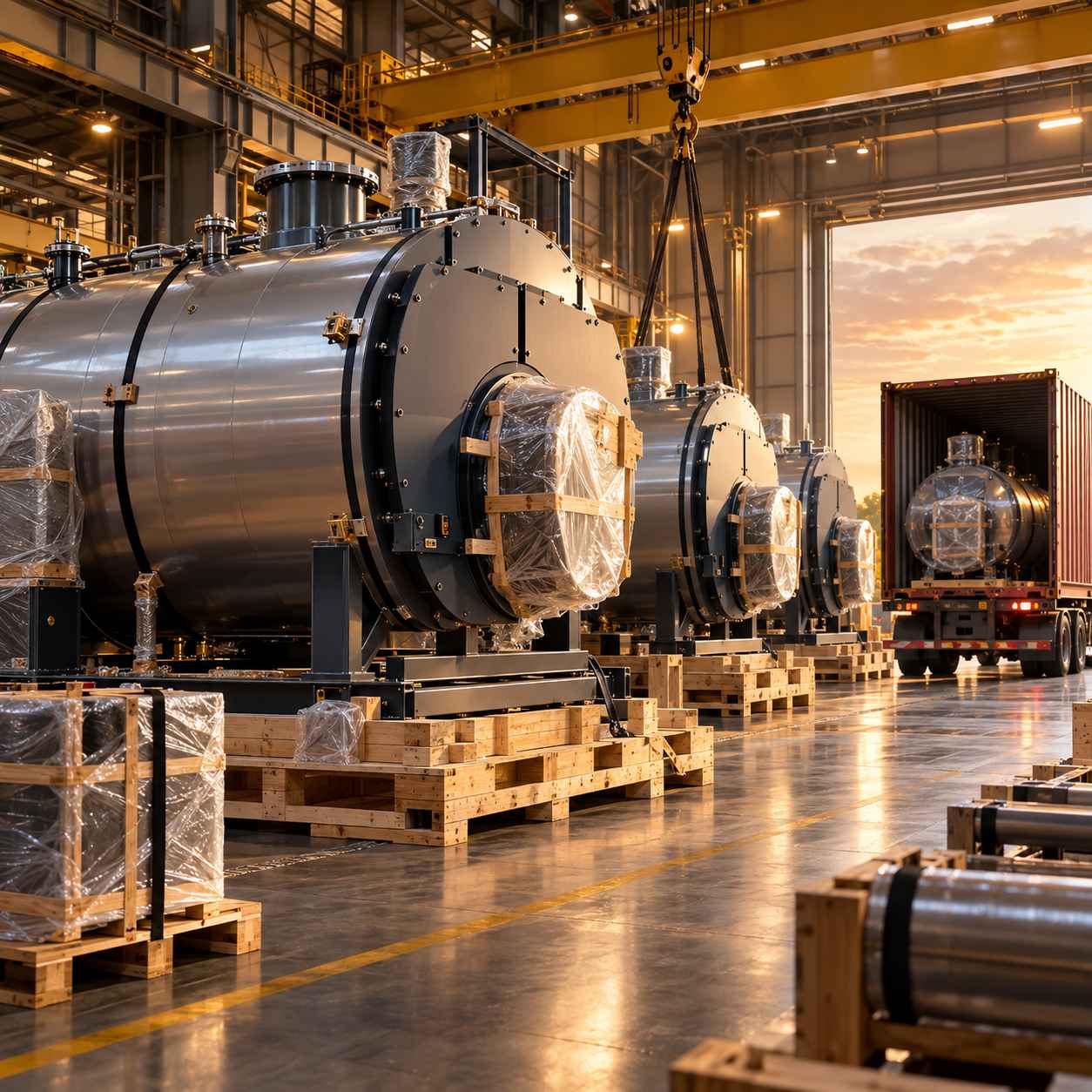
Industrial operations across manufacturing, processing, textiles, food production, chemicals, paper, and other sectors depend heavily on reliable heat and steam. As energy costs, production requirements, and efficiency expectations continue to evolve, businesses are increasingly looking at integrated steam and power systems rather than treating boilers and turbines as separate pieces of equipment.
A well-designed system can help industries generate steam consistently, recover usable energy, and utilize steam effectively within their production processes. This makes the selection of suitable boilers, turbines, and supporting equipment an important part of industrial plant planning.
Why Industrial Steam Systems Matter
Steam is widely used because it can transfer large amounts of heat efficiently and can be distributed throughout a production facility. Depending on the industry, it may be used for heating, drying, processing, sterilization, evaporation, power generation, or other thermal applications.
The boiler is at the heart of many such systems. Its performance affects steam availability, fuel consumption, operating stability, and overall plant efficiency.
Different industries require different boiler configurations. Factors such as fuel type, steam capacity, operating pressure, automation requirements, available space, and process conditions should therefore be evaluated before selecting equipment.
Choosing the Right Industrial Boiler
Selecting an industrial boiler involves more than choosing a particular capacity. The equipment needs to match the operating conditions of the facility.
Important considerations include:
- Required steam generation capacity
- Working pressure
- Fuel availability and characteristics
- Combustion technology
- Plant operating schedule
- Automation requirements
- Space available for installation
- Maintenance requirements
- Energy-efficiency objectives
- Applicable safety and regulatory requirements
For example, different boiler configurations may be suitable for solid fuels, biomass, liquid fuels, or other energy sources. Some industrial systems are designed for quick steam generation, while others focus on high-capacity continuous operation.
Understanding the Role of Industrial Boiler Manufacturers
Working with experienced industrial boiler manufacturers in India can help businesses evaluate equipment according to their specific production requirements.
Manufacturers and engineering suppliers may provide different boiler designs, including shell-and-tube, water-tube, fluidized-bed, and specialized multi-fuel systems. The appropriate design depends on the application, fuel, capacity, pressure, and operating conditions.
A supplier’s capabilities should also be considered beyond the boiler itself. Engineering support, installation assistance, commissioning, maintenance, spare parts, and system integration can all influence the long-term performance of an industrial steam plant.
Steam Turbines and Industrial Power Generation
Once steam has been generated, industries can use it directly for process requirements or route it through a steam turbine for power generation, depending on the plant configuration.
Steam turbines convert the energy contained in high-pressure steam into mechanical energy. This mechanical energy can then be used to drive a generator or other equipment.
Industrial facilities may use different turbine configurations depending on their steam cycle. Condensing turbines, back-pressure turbines, and extraction turbines can serve different operational requirements.
For plants that produce excess steam or have suitable process steam conditions, turbine-based generation can become part of an integrated energy strategy.
The Growing Importance of Packaging Steam Turbines
The packaging and related manufacturing sectors can have substantial thermal-energy requirements. Steam may be used in processes involving heating, drying, forming, corrugation, or other production stages.
Packaging steam turbines can form part of an integrated steam-and-power arrangement where the plant’s steam system is designed to support both process requirements and electricity generation.
The exact application depends on the facility’s steam demand, pressure levels, operating hours, and overall process design. In some installations, steam is primarily required for production, while in others, available steam can also support captive power generation.
Packaging operations already use steam for processes such as shrink wrapping and sterilization, demonstrating the broader role of steam technology in this sector.
Combining Boilers With Power Generation
An industrial energy system becomes more effective when its individual components are considered together.
A typical configuration may involve:
Fuel → Boiler → High-Pressure Steam → Process / Turbine → Power + Useful Heat
This arrangement allows businesses to consider both thermal and electrical energy requirements during plant design.
Waste heat recovery can provide another opportunity. Industrial processes may generate significant quantities of waste heat that would otherwise be released into the environment. A waste heat recovery boiler can convert suitable waste heat into steam, which may subsequently be used for process requirements or power generation.
Daack Vessels, for example, is listed as supplying waste heat recovery-based power plants in addition to several types of steam boilers and power-plant equipment.
Fuel Flexibility and Boiler Selection
Fuel flexibility is particularly relevant for industries operating in environments where fuel availability and costs can change.
Some boiler systems are designed to accommodate different solid fuels or biomass-based fuels. For instance, publicly listed specifications for Daack Vessels’ boiler systems include multi-fuel and agro-waste applications across different configurations.
However, fuel selection should always be evaluated alongside combustion efficiency, emissions requirements, fuel handling, ash management, boiler capacity, and operating conditions.
A lower-cost fuel does not necessarily result in lower overall operating costs if the combustion system is not appropriately designed for that fuel.
What to Consider Before Installing a Steam System
Businesses planning a new steam or power-generation system should assess the complete operating environment before finalizing equipment.
- Steam Demand
Calculate both average and peak steam requirements. Oversizing or undersizing the boiler can affect efficiency and operational performance.
- Fuel Characteristics
The moisture content, calorific value, particle size, and consistency of fuel can influence combustion and equipment selection.
- Process Requirements
Identify whether steam will be used for heating, drying, sterilization, evaporation, mechanical processes, or power generation.
- Future Expansion
If production capacity is expected to increase, the steam system should be evaluated with potential future requirements in mind.
- Maintenance and Service
Access to technical support, spare parts, inspection, and maintenance services can help reduce unplanned downtime.
Moving Toward Integrated Energy Solutions
Industrial plants are increasingly looking at energy systems as interconnected networks rather than isolated machines. Boilers, steam turbines, heat-recovery systems, generators, condensate systems, and process equipment can all influence overall plant performance.
This approach can help businesses identify opportunities to use energy more effectively while maintaining reliable production.
For companies evaluating boiler and turbine solutions, it is useful to work with an equipment partner capable of understanding the complete application rather than focusing on a single product category.
Conclusion
Reliable steam generation remains essential to many industrial processes, while steam turbines and heat-recovery technologies can provide additional opportunities for energy utilization and power generation.
From selecting the appropriate boiler design to evaluating turbine configurations and waste heat recovery, every component should be matched to the plant’s actual operating requirements.
Businesses looking for industrial boiler manufacturers in India should therefore evaluate manufacturing capabilities, technical support, fuel flexibility, system integration, and long-term service requirements alongside the initial equipment cost.
At the same time, specialized solutions such as packaging steam turbines demonstrate how steam technology can be adapted to the requirements of specific industries. With careful planning and appropriate equipment selection, industrial facilities can build steam and power systems that support reliable production while making better use of available energy.