

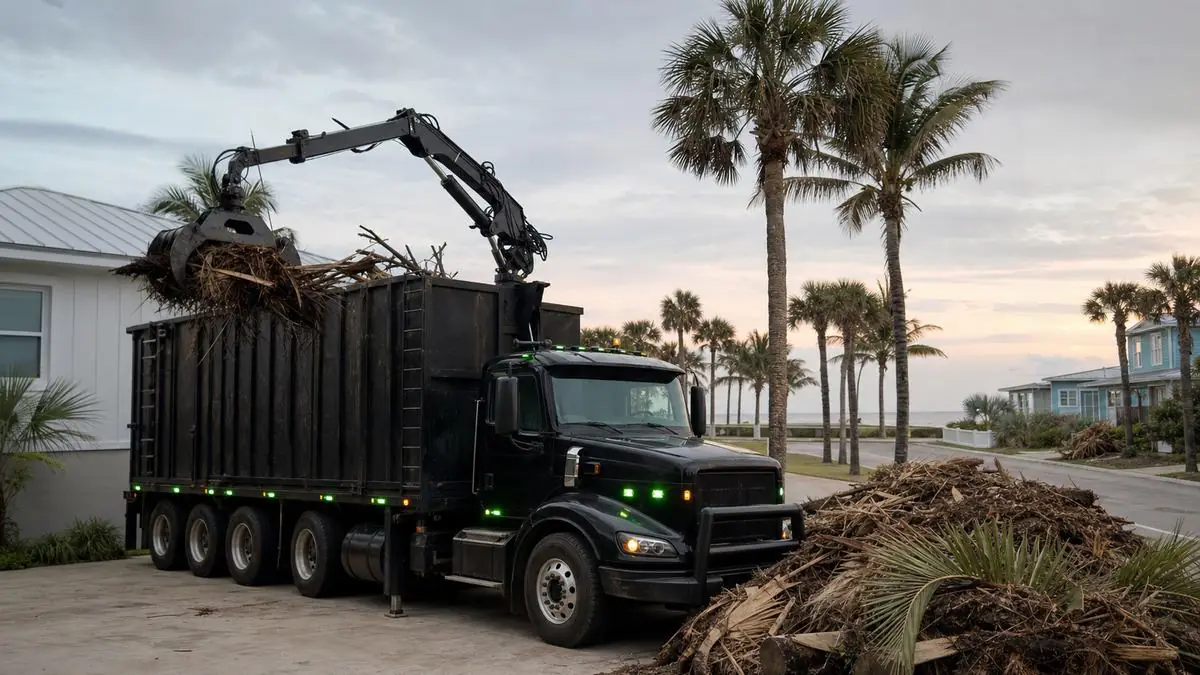
Managing large amounts of brush, branches, logs, storm debris, or other bulky materials can become difficult when standard hauling methods are not enough. Grapple truck services from AZ Crane and Gapple provide a practical solution by combining lifting and loading capabilities with transportation, helping property owners, contractors, municipalities, and land management teams handle demanding cleanup projects more efficiently.
A grapple truck uses a hydraulic boom and grapple attachment to collect and load materials directly into the truck. This reduces the need for repeated manual lifting and can make debris removal more organized, particularly when materials are scattered across a large work area.
What Are Grapple Truck Services?
Grapple truck services involve specialized trucks equipped with hydraulic lifting arms and grapple attachments designed to pick up, move, and haul bulky materials. Unlike conventional hauling equipment, a grapple truck can often load debris without requiring workers to manually carry every piece to the truck.
This capability can be valuable after tree removal, property clearing, construction work, severe weather, or routine vegetation management. The equipment can handle materials that are awkward, heavy, or difficult to move using standard tools.
Common materials handled through grapple truck operations may include:
- Tree limbs and branches
- Large logs and wood debris
- Brush and vegetation
- Storm-related debris
- Construction-related materials
- Landscaping waste
- Other bulky materials suitable for grapple loading
Selecting the right equipment for the material and job site can help prevent unnecessary handling and keep cleanup activities moving in a more controlled manner.
Why Grapple Truck Services Matter for Debris Removal
Large debris presents more than a hauling challenge. Moving heavy branches and logs manually can require significant labor, while scattered materials may take considerable time to gather before transportation can even begin.
Grapple truck services address this challenge by combining collection, lifting, loading, and hauling into a more streamlined process. A hydraulic grapple can reach materials from different positions, allowing operators to gather debris without requiring every item to be manually carried.
For contractors and property managers, this can make scheduling easier. For municipalities and cleanup teams, grapple trucks can provide useful support when large volumes of vegetation or storm debris need to be cleared from roadsides, public areas, or properties.
Key Benefits of Grapple Truck Operations
The value of a grapple truck extends beyond simply moving debris from one location to another. Properly planned equipment use can contribute to safer and more efficient site management.
1. Handles Bulky Materials
Branches, logs, and brush can be difficult to move with conventional hauling equipment. A grapple attachment is designed to secure irregularly shaped materials and lift them into the truck.
2. Reduces Manual Handling
Repeated lifting and carrying can place considerable physical demands on workers. Mechanical loading can reduce the amount of manual material movement required during suitable cleanup projects.
3. Supports Faster Site Cleanup
When collection and loading occur with the same specialized vehicle, fewer separate handling stages may be necessary. This can help crews keep the cleanup process organized and maintain progress across larger areas.
4. Reaches Scattered Debris
Storm damage and land clearing can leave materials spread throughout a property. The hydraulic boom provides reach that can help collect debris from locations that may be inconvenient for standard loading methods.
5. Improves Job-Site Organization
A well-planned debris removal process helps keep work areas more orderly. Prompt removal of large materials can also leave more usable space for subsequent landscaping, construction, maintenance, or restoration activities.
When to Consider Grapple Truck Services
Not every cleanup project requires specialized hauling equipment. However, certain conditions make grapple truck operations particularly useful.
Consider this type of service when a project involves a significant quantity of tree debris, large branches, logs, brush, or other bulky materials. It can also be practical when debris is spread over a wide area or when conventional equipment cannot efficiently reach the material.
Common applications include:
- Storm cleanup: Strong winds and severe weather can leave large quantities of branches and fallen trees across properties and access areas.
- Tree service support: Tree removal and trimming projects can produce substantial amounts of wood and brush that require organized hauling.
- Land clearing: Clearing overgrown areas can generate bulky vegetation that must be collected and transported.
- Construction cleanup: Certain projects produce large debris that requires specialized loading capabilities.
- Municipal maintenance: Public works teams may need support for vegetation management, roadside cleanup, or storm response.
- Property maintenance: Commercial and large residential properties may periodically require removal of accumulated branches and landscape debris.
The most appropriate equipment depends on factors such as material volume, access, terrain, loading location, and disposal requirements.
Preparing a Job for Grapple Truck Services
Good preparation can make a significant difference before specialized equipment arrives. Start by identifying the type and approximate amount of debris requiring removal. This information can help determine whether grapple loading is appropriate for the project.
Access should also be considered. Large trucks require sufficient room to enter, position safely, operate the hydraulic boom, and leave the property after loading. Low branches, narrow driveways, parked vehicles, utility lines, fences, and other obstacles should be identified before work begins.
A practical preparation checklist includes:
- Identify the materials requiring removal.
- Estimate the approximate debris volume.
- Clear unnecessary vehicles and obstacles from access areas.
- Identify overhead hazards and restricted areas.
- Confirm suitable locations for truck positioning.
- Separate materials when specific disposal requirements apply.
- Communicate site conditions before scheduling service.
Clear preparation helps create a safer working environment and allows the equipment operator to approach the job with a better understanding of site conditions.
Choosing the Right Grapple Truck Provider
Experience matters when specialized lifting and hauling equipment is involved. A dependable provider should understand how grapple equipment operates and how different site conditions can affect loading and transportation.
Before scheduling service, consider several practical questions:
- Does the provider have suitable grapple equipment for the project?
- Can the service accommodate the type and volume of material involved?
- Is the team familiar with the access conditions at the property?
- Are loading and hauling requirements clearly explained?
- Does the provider prioritize safe equipment operation?
- Can scheduling accommodate the project’s expected timeline?
Clear communication is especially important for projects involving large trees, storm debris, restricted access, or substantial material volumes. Sharing accurate information early can help reduce surprises when equipment arrives.
Safety Considerations for Grapple Truck Work
Specialized lifting equipment requires careful attention to the surrounding environment. Operators need adequate space to position the truck and maneuver the hydraulic boom while accounting for nearby structures, vehicles, pedestrians, trees, and overhead utilities.
Property owners and contractors should avoid entering active equipment operating zones unless instructed to do so. Children, pets, bystanders, and unnecessary vehicles should remain away from the work area.
Debris should also be assessed before loading. Materials containing hidden hazards, excessive weight, or unexpected objects may require additional precautions. Professional equipment operation and clear communication between everyone involved can help support a safer project.
Building a More Practical Debris Removal Plan
Effective debris removal starts before the first branch is lifted. A clear plan should account for collection, access, loading, transportation, and final disposal. Treating each stage as part of one process can make the project easier to coordinate.
For contractors, this means considering hauling requirements during project planning rather than waiting until debris accumulates. For property owners, it means identifying access limitations and material types before requesting service.
The goal is not simply to remove debris. A well-organized approach helps keep the property functional and prepares the site for whatever comes next, whether that involves landscaping, construction, restoration, or routine maintenance.
A Practical Solution for Demanding Cleanup Projects
Large-scale debris can quickly become a logistical problem when handled without suitable equipment. Grapple truck services offer a specialized approach by bringing hydraulic loading capability and hauling together in one operation.
For projects involving branches, logs, brush, storm debris, or other bulky materials, choosing appropriate equipment can reduce unnecessary manual handling and support a more organized cleanup process. Careful planning, suitable access, experienced operation, and clear communication all contribute to better project coordination.
AZ Crane and Gapple provides specialized equipment support for demanding lifting and debris-handling needs. When a cleanup project involves bulky materials that require more than conventional hauling, contacting a qualified grapple truck provider can be a practical next step toward getting the site cleared and ready for its next phase.